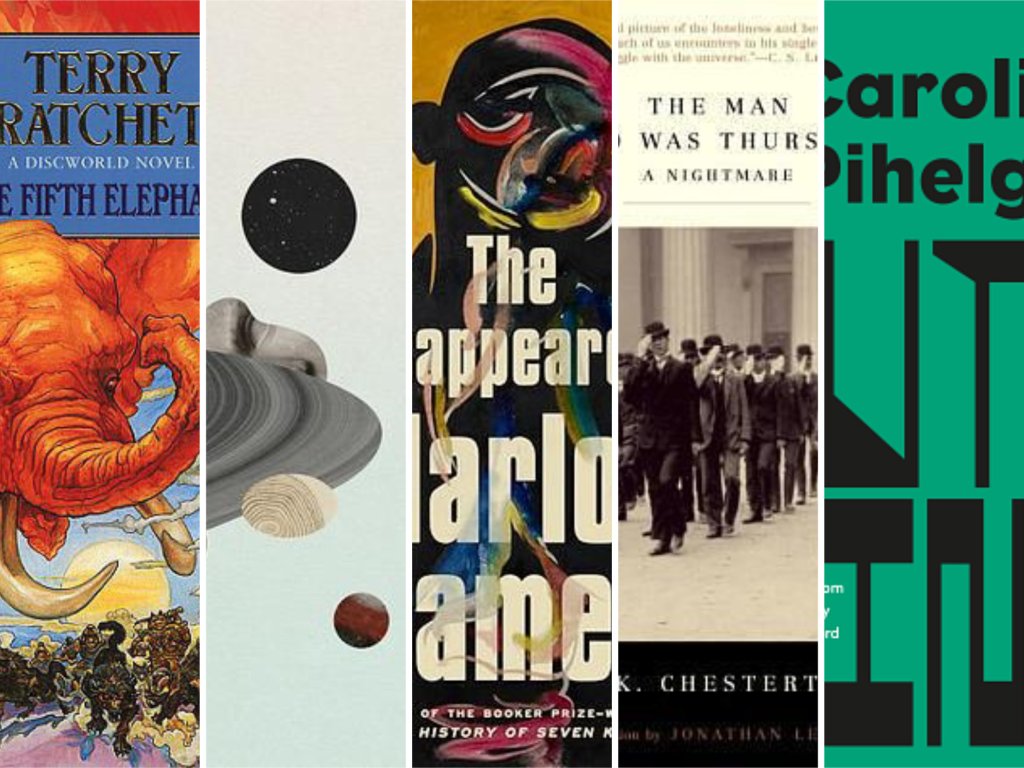

October is for the readers. It’s for the cool kids. It’s for staying inside and not going to scary movies and reading nerdy fiction about detectives or religion or Jamaica. Yeah.
Here’s what I read in October.
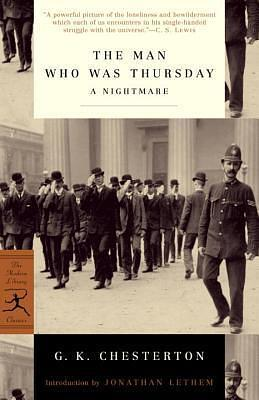
The Man Who Was Thursday by G.K. Chesterton
fiction / mystery / classics
This has been on my reading list since I came upon Dan Thurot’s brilliant review of the board game adaptation. The Man Who Was Thursday starts as a turn of the century spy thriller but quickly–very quickly– spirals out from conspiracy into comic madness. Our protagonist, Gabriel Syme, is a genius poet-detective who manages to infiltrate the world’s society of anarchists at it’s very highest ranks. It’s at times funny and nearly always absurd, but the story propels along making more-or-less sense and even getting predictable. It’s a hard book to talk about without getting into spoilers, though, as each mounting revelation and upheaval expounds upon one another. The ending (another thing I won’t spoil) is well-earned and worth stewing on. I was hoping for the novel to be a little more–its the sort of thing people base their personalities on–but I enjoyed it.
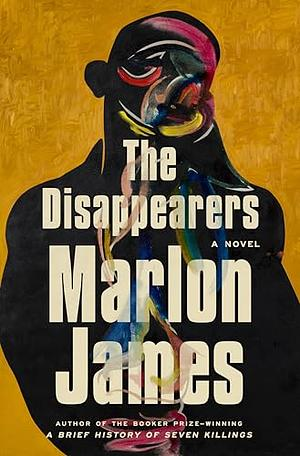
The Disappearers by Marlon James
fiction / literary
I meant to get around to A Brief History of Seven Killings, Marlon James’s previous novel, and maybe I still will. However, The Disappearers has been amassing acclaim and was available from my local library, so I landed on it first.
The Disappearers follows a group of gay men in Jamaica putting on a play in the face of the virulent homophobia they face. During a rehearsal, they are victim to a brutal attack that leaves several scarred and injured, and one of them dead. This is a novel primarily about suffering. Not even primarily– this book is five hundred pages, at least, of suffering and desperately grappling with what has been done. Despite the acclaim, I have seen some folks complain that The Disappearers is too heavy handed with its rabid violence or its unmasked sexuality. I thought those were the realest things about the novel. I would argue, instead, that what’s heavy-handed about The Disappearers is the dialogue and how the characters talk to each other.
These characters mostly dislike each other, even bound as they through horrible shared experiences. It’s fertile ground for complex, heart wrenching relationships and terse conversations. And yet, time and time again, these tough characters who can’t seem to express themselves do just that– they express themselves loquaciously about the exact nature of their suffering. They spill their heart to someone who they claim to not care about. They reveal the rawest parts of themselves in detail, in conversation, when they meant to keep it bottled up. Sometimes I think this is intentional, other times I found it a bit indulgent. Still, I enjoyed how unflinching and deep this one got.
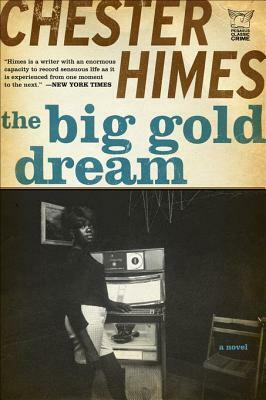
The Big Gold Dream by Chester Himes
fiction / crime
A couple months back I read another of Chester Himes’s crime novels, Cotton Comes to Harlem. This one is decidedly lesser. The mystery (and especially the ending) are a letter grade worse, and the casual antisemitism has aged exceptionally badly.
But damn does Himes know how to write life-and-then-some into his con men, his dirty cops, and his stool pigeons. While Cotton Comes to Harlem roasted one type of scammer, The Big Gold Dream sets its sights on rich, manipulative prosperity gospel preachers. A deserving target and, truly, a fun cast of characters. I think what’s lacking from this novel are our two detectives–much of the story instead revolves around myriad other parties snooping around and making things more complicated while our main characters are off screen. They’re the best part and they’re on the sideline! Let Coffin Ed get in there with his gun and say some cold-as-ice stuff!
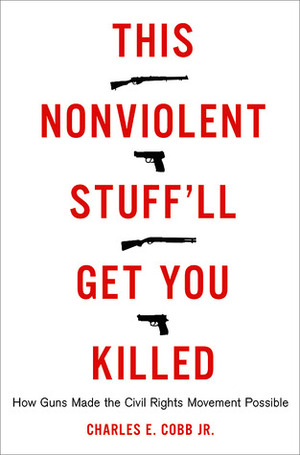
This Nonviolent Stuff’ll Get You Killed by Charles E Cobb Jr
nonfiction / history
I can see myself becoming an American history guy. I think the mental roadblock for me has always been this: being a history buff is maybe just about knowing a lot about World War II or other such wars. I know that’s not entirely true, but…
This book is about the civil rights movement and, more specifically, how a tradition of gun ownership amongst black people in the south interacted with the that movement’s methods of nonviolence. I learned a lot from this book. Cobb hammers home his arguments again and again: the nonviolent activists that came to help in the rural south did not disarm locals. In fact, these protesters and organizers often heavily benefited from armed resistance. Nonviolence was still integral and important, but no one was going to convince folks they didn’t need self-defense. A tad repetitive but overall really engaging and well-researched.
The Largesse of the Sea Maiden by Denis Johnson
fiction / literary / short stories
I vaguely remember watching Jesus’ Son, the film adaptation of another of Denis Johnson’s short story collections, but I’m otherwise unfamiliar with his work. The Largesse of the Sea Maiden‘s stories largely revolve around memory, obsession, and addiction. The stories themselves are small, unassuming, and quiet. I found myself enjoying each of these a good bit. None of them rising to a Greatest Short Story Ever but all of them a solid Very Good. The last short story, about a man whose life becomes warped around the belief that Elvis was replaced with a doppelganger, is a gorgeous encapsulation of the whole collection. The Elvis conspiracy is a weird misunderstanding–a little tragedy– that unravels a life, told through an acquaintance becoming close to the otherwise-normal conspiracist.
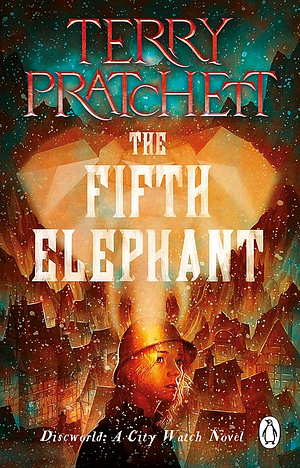
The Fifth Elephant by Terry Pratchett
fiction / fantasy
In this month’s installment of my Discworld readthrough, The Fifth Elephant covers dwarf, vampire, and werewolf culture in much finer detail than previous entries. Sam Vimes, head of the Ankh-Morpork watch and a duke by marriage, is sent as emissary to the gothic Uberwald. Along the way, we learn of the regressive underground dwarves (and their resentment towards more progressive above-ground ones), dally in the family politics of werewolves and their relationships to normal wolves, and enjoy a neat wintry romp. Pratchett has an uncanny ability, especially in these later novels, to balance parody of fantasy with unbridled love and refinement of it. The dwarves are silly and over-the-top parodies of Tolkien, of course, but their politics feel real and meaningful. Cheery, the first woman dwarf, is a star. So is Angua. So is my favorite guy of all time, Carrot. Also the sometimes-smart-sometimes-dumb but caring troll Detritus has acquired a cool character trait: he shoots a big crossbow that disintegrates its own arrows at people.
Audition by Pip Adam
fiction / literary / sci-fi
The first third of this novel is written entirely in dialogue. Three giants are stuck in a large spaceship, the Audition, and have grown to be so big that they cannot move. The only thing keeping the ship going is their speaking–so they talk to one another. Even in moments of would-be silence, they repeat mantras and mindlessly recollect lunch menus or facts about the ship. They cannot mention anything too thought-provoking or get bogged down in a meaningful moment of silence. They are trapped here and yet, to keep their prison afloat in empty space (headed who knows where–maybe nowhere) they must keep talking. It’s a powerful opening.
From there, the story spirals out. It gets bigger, even more imaginative, even more abstract. I don’t think it’s ever as good as the focused, razor sharp opening.
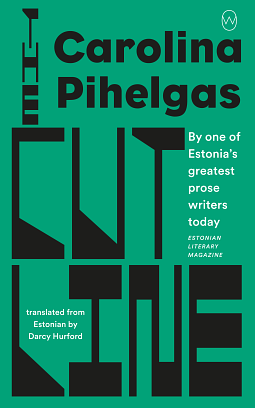
The Cut Line by Caroline Pihelgas
fiction / literary
This novel was recommended in a video by Liz Davidson, another boardgame person much smarter than me. I was really impressed by it.
An Estonian woman named Liine runs away from an abusive relationship that has defined the last dozen years of her life. She stakes out in a semi-deserted family summer house where she busies herself with gardening, house upkeep, and her visiting family. She has sought an escape, maybe, but the land is unruly (in part due to climate change) and, just down the street, a military base rings out shots nonstop in anticipation of war with Russia. This is a very short, well-written novel that’s not hard to read but has plenty to chew on. For Liine–and all of us–there is no distant past to safely escape to, nor a distant future to dream happily of, nor a pastoralism to innocuously lose oneself in. And yet, this novel manages to be relatively hopeful. Very affecting.

Leave a Reply