
I did not get many games played in the month of June. That’s a bit of a bummer, especially since I have been itching to write more for Mana Worm. I have a couple board game reviews percolating, but in the meantime I wanted to try something different. Since we are coming up on the site’s first anniversary, I thought I could (gently) expand the scope of this blog and start writing about more things. There’s no rules!
I had a lot of reading time this month, a new e-reader, and a couple books I really wanted to get read– so I read a lot. This post contains a little blurb and an extemporaneous mini-review for each of the fourteen books I read this month. There’s an even mix of fiction and nonfiction on here, including two gaming-related texts that are worth checking out if you’re a diehard Mana Wormer. Regardless, hopefully something on here makes you wanna do some reading, because reading is cool.
There are discussions of serious, potentially triggering topics in some of these books; I’ve included content warnings ahead of the corresponding sections. Titles are presented in the order in which I finished them. Cheers.
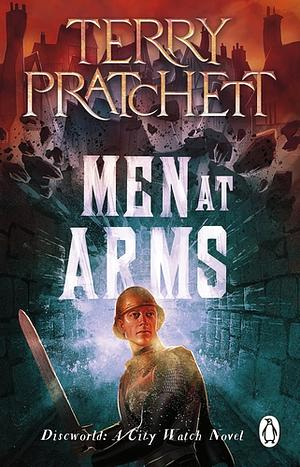
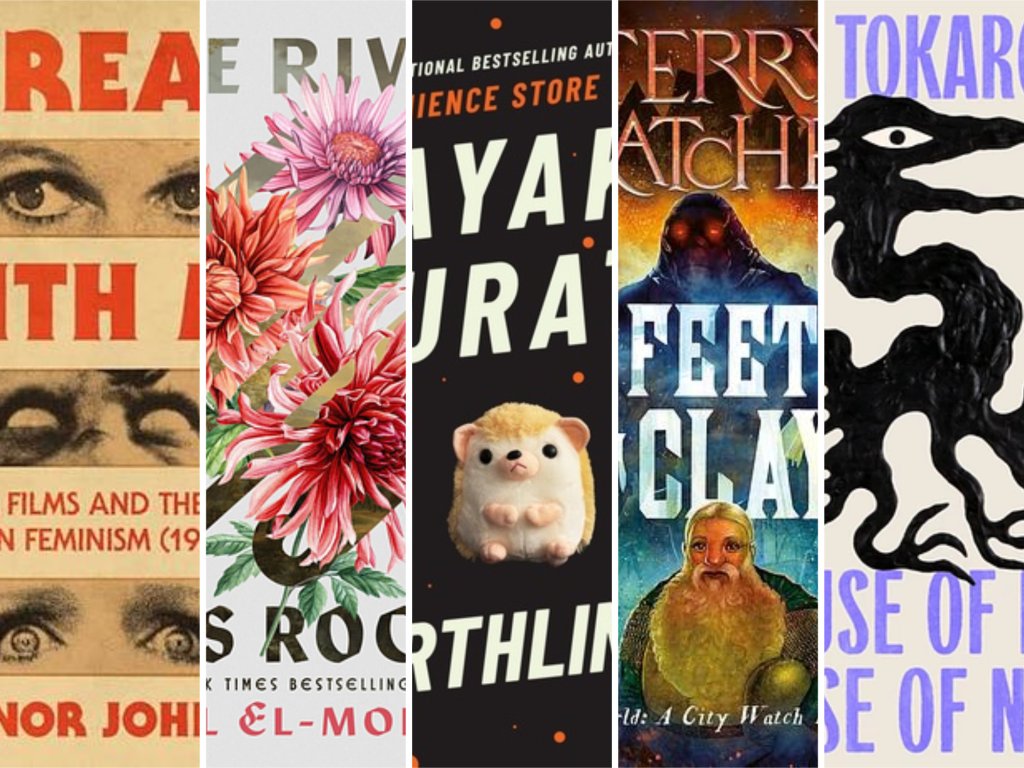
Men at Arms by Terry Pratchett
fiction / fantasy
I’ve been slowly meandering through the Discworld novels, picking through the ones which seem most interesting. Pratchett’s style is economical and lightning-fast but he knows when to pull out the red carpet for a good gag or to flex his literary chops. The Night Watch series has the best balance of goofy tropes and genuine, human-centered narrative for me.
Men at Arms follows Sam Vimes in his reluctant retirement from head of the city watch. Meanwhile, a string of unsanctioned assassinations committed with the Discworld’s first gun break out amidst rising troll-vs-dwarf tensions. There’s a cool werewolf lady. There’s a talking dog. There’s Carrot, an upstart watchman from Guards! Guards! reprising his role as the Best Most Good Guy (but unironically likeable). If you are interested at all in Discworld, it really feels like you can’t go wrong with any of these novels. Just some honest, funny, page-turning stuff.

Legend of the River King by Alexander B. Joy
nonfiction / video games
I have never played Legend of the River King for the GameBoy Color. I wasn’t alive when it came out, and I, like many others, had this game perfectly eclipsed by the worldwide phenomenon that was Pokemon. Alexander Joy, luckily for us, loves this game. Legend of the River King contains essays on philosophy, ecology, fishing (of course), translation and the culture of Japan all derived from a close reading of the GBC game. I was not convinced by all of Joy’s arguments, but his missteps are rare and usually a result of swinging for the fences-and-then-some. This is a game, presented by Joy, as a treatise on nature and childhood–on learning to cooperate and be inspired by nature rather than Pokemon’s “mastery” over it. If you’ve ever loved a game enough to have been genuinely shaped in some way by its journey, you will find comradery in Legend of the River King.
As a bonus, Joy wrote an essay about soft-locking in Legend of the River King that is basically a B-side to this book. If that article tickles your fancy, you should consider giving this a shot.

Mood Machine: The Rise of Spotify and the Costs of the Perfect Playlist by Liz Pelly
nonfiction / music
Has anyone ever read any good things whatsoever about streaming? We all know, intuitively and through secondhand complaints from artists we love, that there’s something sinister and unfair going on. Pelly unravels Spotify’s history, its role as tastemaker and industry butcher, and confirms all of our worst suspicions. From Spotify-branded playlists deciding what gets played (and who gets paid), to “fake” in-house artists making less per stream, to straight up streaming-era payola; it’s all here and it’s all bad. Spotify’s origin story, which I knew nothing about before this book, was so on the nose that it almost wrapped around to being shocking.
Pelly unapologetically loves the small, underground artists that are uniformly hurt by Spotify. This is an incredible work of reporting she’s put together in their defense, acknowledging and platforming the communities that Spotify routinely takes advantage of and ignores. Super quick, informative read.

Walden by Henry David Thoreau
nonfiction / nature / philosophy
This is a classic I think I read (some of) in college. Walden is part memoir about a time he lived out in the woods and part essays about how messed up it is that modern life asks so much and gives back so little. It’s about the fantasy of living off the grid before the grid was the grid. It’s about watching the birds and the fish and the flowers and coming to appreciate them. The parts where he argues against modernity have become much more famous than the bird parts, but I liked the second half fine.
In order to come up with all the compelling arguments in the first half, I figure, he had to witness and write about the swallows and spending afternoons floating through Walden pond in the second half. There’s some beautiful writing here. Thoreau summons all of his skill and lyricism in nature’s defense and immortalization. After Legend of the River King, I wanted to sit and think about how beautiful nature is for a while, and this gave me an excuse to do that. Walden can feel solipsistic in one breath and full of love for fellow man and animal in the next. It almost nullifies itself. If I truly want to embrace the calm of the water and the independence of the woods, maybe I should just go do that, not necessarily read Walden.
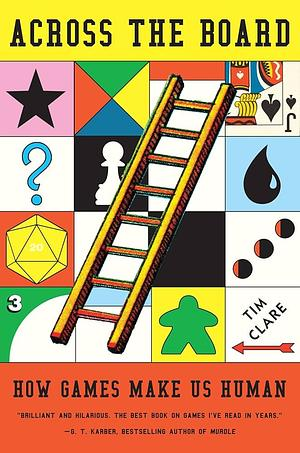
Across the Board: How Games Make Us Human by Tim Clare
nonfiction / board games / sociology
Tim Clare is an awesome guy to have writing about your favorite hobby. Across the Board wasn’t the most revelatory thing I’ve ever read–mainly because I’ve read too many things about games already. This book loves board games. Across the Board reads like a Board Games 101 survey including everything from the first ever dice games played thousands of years ago to Blood Bowl being played by Ukrainian soldiers this decade. Each chapter is a lovely, sweet little dollop of board games culture.
I especially love when Clare goes somewhere and gets his hands dirty with a game. He learns the beloved Japanese memorization/dexterity game Karuta with a semi-retired semi-pro, and it’s amazing. If you are someone who has only played like, Catan, but you suspect this whole board game thing might have a magic aura to it, this book is for you.

The Hound of the Baskervilles by Arthur Conan Doyle
fiction / crime
The titular Hound of the Baskervilles is a phantasmal dog that haunts a family, the Baskervilles, who live out on the moor. The patriarch of the family has been killed by a dog-inflicted heart attack, and who better to solve the case than Sherlock Holmes and his assistant Watson. Buddy-reading this alongside my coworker, it was fun doing intermittent check-ins on who we thought was guilty, what wasn’t adding up, and what we thought would happen. Read this way, Doyle’s work comes across as an interactive puzzle, inviting the reader to make their own deductions to “beat” Sherlock.
As for the mystery in this one: it’s pretty good! The moor is an interesting location filled with suspicious characters. Watson plods around like a CRPG character exhausting every dialogue tree with anyone he can come across, uncovering quest lines, and getting his bearings without committing to any one idea or faction. I’ve only read a handful of Sherlock stories, but this one ranks near the top.
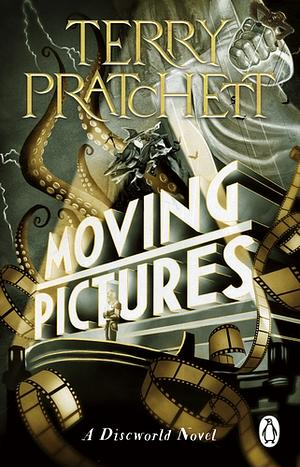
Moving Pictures by Terry Pratchett
fiction / fantasy
With Moving Pictures, I’ve now finished six Discworld novels. This one, unfortunately, is my least favorite thus far. Moving Pictures follows wizard-to-be Victor who, along with several other citizens of Ankh-Morpork, is magically beckoned to a remote place called Holy Wood. Here, he and his co-star, Ginger, are possessed by movie magic into creating “clicks”– moving pictures.
There’s some fun to be had here, including (I’m pretty sure) the introduction of beloved Discworld character Gaspode. Cut Me Own Throat, Ankh-Morpork’s resident capitalist and sausage salesman, takes on an important role in the story, as well. Overall, though, I found the story to be a little by-the-numbers. It’s a send up of old Hollywood, the inanity of the superstar and actors and the degradation of entertainment. But, I dunno, I wasn’t convinced or tickled that often. Pratchett does find ways to make Victor and Ginger interesting characters worth rooting for, as he often does, and the story’s epic climax was worthwhile, but getting there was less rewarding than usual.
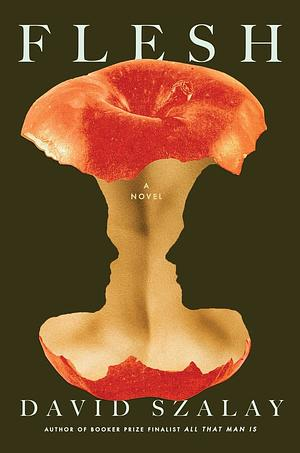
Flesh by David Szalay
fiction / contemporary / litfic
content warning: sexual abuse, child sexual assault, graphic sex
Flesh is about a Hungarian immigrant named István. At a young age, he is sexually abused by an older woman, which results in an alienation from himself and his own agency. István’s life is a blur of misunderstandings. He struggles to connect with anybody, defaulting to sex, an act which has come to mean very little but also everything to István. Conversations in this book are frustrating and terse, with entire pages of dialogue taken up by one or two word utterances exchanged back and forth until somebody leaves the room or, often, the luxury poolside.
As he comes of age and more opportunities float his way, István goes from tragic, hopeless figure to a tragic, successful one. He bounces from woman to woman, gig to gig, until he ends up the same man but now, through happenstance, rich. The trauma is unresolved. István is a hollow, passive figure who cannot be filled up no matter how much money he makes, how much sex he has, or much art he gets to look at. Whenever he appears close to healing or emerging as an active participant in his own life, something stops him. It’s bleak. A good but difficult read.
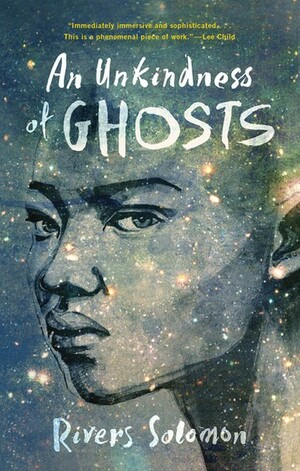
An Unkindness of Ghosts by Rivers Solomon
fiction / dystopian
content warning: a whole lot of stuff. sexual assault, suicide, graphic violence, extreme racism.
An Unkindness of Ghosts is about a doomed spaceship, the Matilda, floating through space towards a promised destiny. On the Matilda, shit’s not looking good. A series of blackouts has resulted in the lower decks, where the genderqueer racialized underclass lives, dropping to near-unlivable temperatures. The upperdecks, home to the cisgender upper-class, is largely inured to the struggles of the lower decks, living in decks fashioned to look like giant golf courses and manor houses.
The story primarily follows Aster, a lower deck doctor and healer who struggles to survive aboard the Matilda. Aster is close “acquaintances” with the upper decker and devout ship surgeon, Theo. This relationship gives her occasional permission to explore the ship’s other decks, but is, of course, complicated. An Unkindness of Ghosts has mystery, dystopia, sci-fi, and romance all tightly wound into one dense package.
Solomon does a lot I like. It’s a story about generational trauma, race, and structural violence. It’s also about characters who are, even under an oppressive heteronormative regime, able to experience queer love and joy. The story itself, the machinations of Unkindness’ plot, fell flat to me. It is a story of rebellion and revolution, but how that revolution takes place and the events that unfold sell it short.
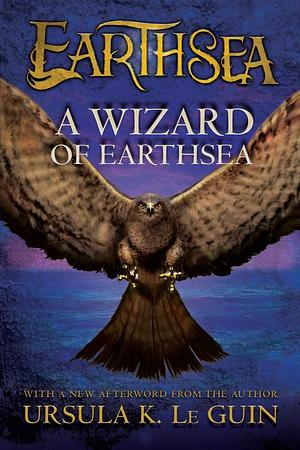
A Wizard of Earthsea by Ursula K. Le Guin
fiction / fantasy
I’ve read a few of Ursula Le Guin’s other works; The Dispossessed is easily one of my favorite novels ever. A Wizard of Earthsea is a fantasy novel that exists, to me, in its own lane. The entire novel is written with such poetic, literary and unique prose. Ged, a young boy, has great wizardly potential and is simultaneously terrified and tempted by that power. Goaded by another wizard-child to attempt necromancy, Ged creates an evil, nameless shadow that now haunts him. No matter how powerful he gets, no matter what other enemies he fells, he cannot overcome his fear of the shadow.
Le Guin does not shy away from creating big, important stories, even in such an unassuming package as a fantasy novel for young readers. I love that this is a fantasy novel not about conquering armies or beating back some world ending evil– it is about fear and power and self-doubt. My main gripe with Earthsea is just how simplistic it is and how little characterization is given to characters other than Ged. Even the world, for all its myriad named geography, felt a little barren. Town to town, the world of Earthsea felt empty, as though it were truly Ged versus the shadow (and some other bad fellas) in an otherwise characterless world. I will eventually come back and read some more of this series, but it’s going on the backburner for now.
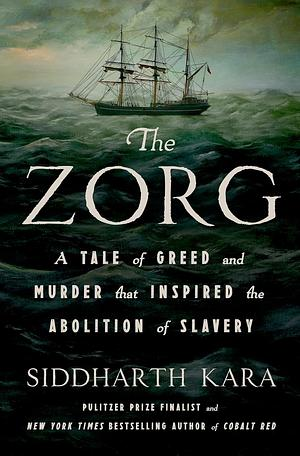
The Zorg: A Tale of Greed and Murder That Inspired the Abolition of Slavery by Siddharth Kara
nonfiction / history
content warning: graphic depictions of slavery, violence, and suicide.
The Zorg was a slave ship whose crew, after mismanaging resources and failing to navigate properly, threw over one hundred captured Africans overboard to drown. This book starts with the history of the Zorg’s crew, from their depravity to their lack of qualifications to crew any ship. It then describes the actual sailing of the Zorg, its capture by the British, its path towards Jamaica, and, ultimately, its terrible crimes. It ends with a courtroom drama as the events of the Zorg would come to light to the public, inspiring a generation of abolitionists to take up the cause against slavery.
This was a hard book to read, obviously, with so many descriptions of conditions both on slave ships and in holds on the Gold Coast. I learned a lot about the economics of the slave trade and how much of it was sort of obscured from polite society. This book goes into how the insurance industry as we know it came, partially, from the need to insure slave ships that were seen as risky financial endeavors. I don’t read a lot of history books, but this one was excellent albeit brutal.
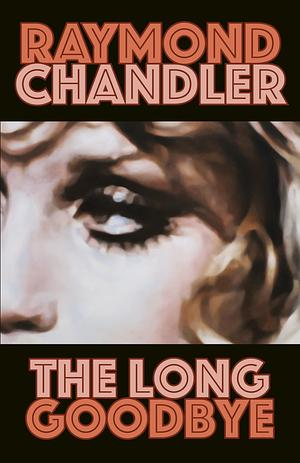
The Long Goodbye by Raymond Chandler
fiction / crime
content warning: suicide, lots of violence, definitely some misogyny and racism
Raymond Chandler’s The Long Goodbye is the first hardboiled, 50s detective novel I’ve read but it won’t be the last. Philip Marlowe is a tough, cooler-than-cool private eye whose war-veteran friend, Terry Lennox, is in some trouble. Lennox is unhappily married into one of the richest families in LA and spends his days relaxing about drinking gimlets. One day he comes to Marlowe with news that his wife has been murdered and he needs to escape the country as the sole suspect.
What ensues is a great, soulful detective story about friendship and being an honest small fry amongst the uncaring, heartless idle rich. Chandler’s writing is so stylistic, so cool, that you can’t help but smirk when Marlowe lights a cigarette and dresses down yet another person for being a phony. Towards the second half of the story, realism and heart can sometimes take a backseat to shocking, crazy story beats. The ending itself, a bit drawn out, undoes some of the goodwill the rest of the story built up.
Even if the detective mystery at the heart of this novel was complete nonsense (which it isn’t… entirely), the writing and the characters are just so good that it almost doesn’t matter. Marlowe is a cool, uncaring guy who, over the course of the novel, is revealed to actually care and want to do what’s right, even when there’s no benefit to doing so. It’s great.
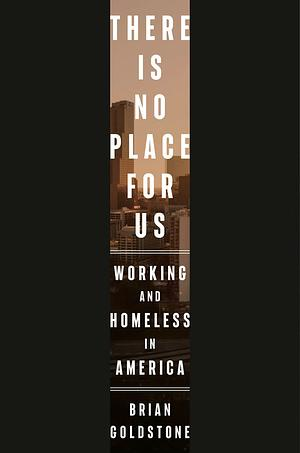
There Is No Place for Us: Working and Homeless in America by Brian Goldstone
nonfiction / sociology
content warning: mentions of sexual assault (including of children), violence, and terminal illness
Somehow the most infuriating book of the whole month, Goldstone’s There Is No Place for Us follows a few women in Atlanta as they navigate homelessness. This book is very similar to Evicted, from subject matter to methodology. Goldstone shadows the lives of these women, removing himself as much as possible from events and recounting their struggles with the unfair housing system. Many people are battling with outdated, intentionally unhelpful social services for a chance at a somewhat-affordable place to stay. Others are exploited in extended-stay hotels, where rents are higher than average but there’s no credit checks or denials due to past evictions.
Over the course of the book, these people go through absolutely blood-boiling misfortune. One is evicted from her burned down house, leading to a scar on her record that makes getting affordable housing near impossible. Another lucks into a Section 8 voucher only to find that, seemingly, no house anywhere will accept her voucher in gentrified Atlanta. In another case, a woman must quit her job to take financial literacy classes in order to receive aid with housing. This book is a maddening indictment of the cruelty that America has inflicted on the poor and homeless.
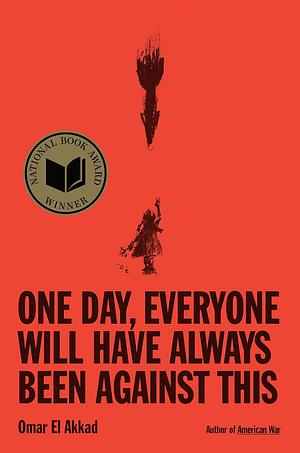
One Day, Everyone Will Have Always Been Against This by Omar El Akkad
nonfiction / memoir / politics
content warning: genocide, murder of children, gore, excessive violence.
Omar El Akkad knows that getting the empire to acknowledge its crimes, in the present, is like pulling teeth. He also comes to this book, with a sad, bedraggled vision of the future: One Day, Everyone Will Have Always Been Against This. When there are no more stakes, when the genocide is said and done, when the neoliberal order is no longer threatened, we will get the saddest, most useless admittance that we were right all along.
This book is part memoir. El Akkad works as a wartime reporter and novelist whose entire life as an Arab man living in America is politicized and called into question. His righteous indignation at the genocide of Palestinians is something which he cannot hide about himself and, yet, he is cautious in fear of being treated as just another “angry Arab man.”
One Day, Everyone Will Have Always Been Against This is a sad, moving book about the way choosing to not participate in an empire which permits and carries out genocide can be the most effective protest. It’s about being given the choice between two political parties who both unequivocally do not see Palestinians as people worth saving. This is an important, important book that does not equivocate or soften its arguments for a more general audience, and for that it’s great.
***
Okay, good talk.
I’ll do another one of these next month and then see where we are at. If you made it this far: I appreciate you. I’ll hopefully have a review of Jinxo, a great little party game, out soon. If you have any book recs or thoughts on any of the things I read this month, let me know.


Leave a comment