
Shaq Fu is a much-maligned fighting game from 1994 starring– who else? — basketball superstar and sellout car insurance spokesperson Shaquille O’Neal. I was playing this Super Nintendo non-classic recently, and decided to at least beat the arcade duel mode. Fighting games aren’t my forte, but I figured if I set the game to “Easy” and (this is key!) set the timer to only ten second rounds, I would be able to fistfully and kickfully negotiate my way to a win with the help of the clock.
That sounds really silly, I know. Hear me out.
Battles were no longer wars of attrition where I would run out of interesting things to do halfway through and start mashing my controller. Each round I would come out of the gate, throw a kick, block a punch, use one of the two or three special move inputs I had learned, and then get shepherded back to my corner with either a win or a loss, but also knowledge. Maybe my flying kick would quickly corner this foe but this other enemy was always jumping into me at the start of battles, leading me to a different, more cautious approach.
In these microcosms of full fights, I was let out to try and win just one or two interactions before the round’s victor was decided. I would learn from that brief clash and then regroup for another. I wouldn’t say I got good at Shaq Fu, but I do think I came out of this experience with a bit more respect for the kind of joy hidden in these 2D fighting games.
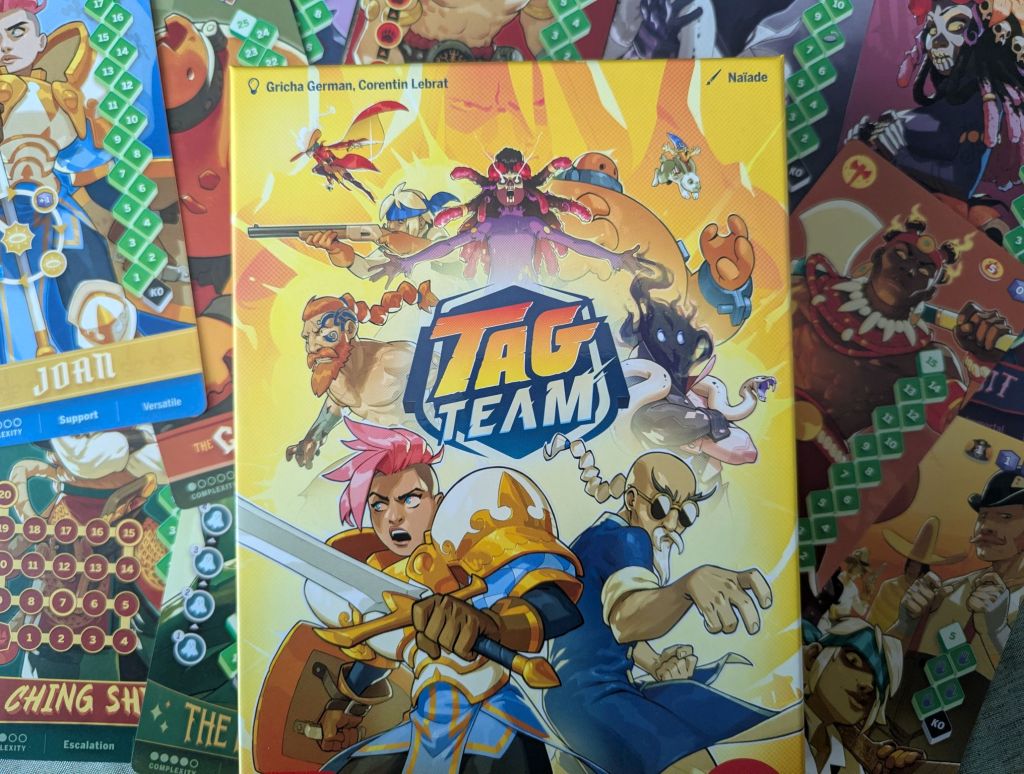
Tag Team is a two player board game emulating those 2D fighting video games. It is a simulation of a simulation of a battle; we are onion-layers away from any real person getting their ass kicked.
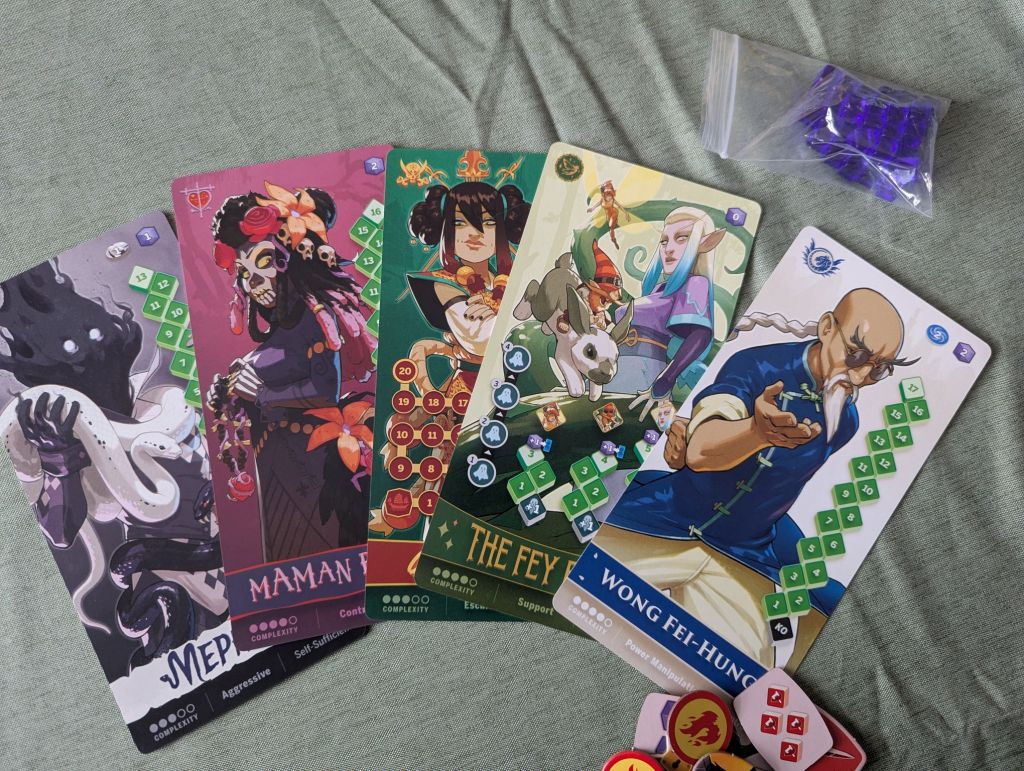
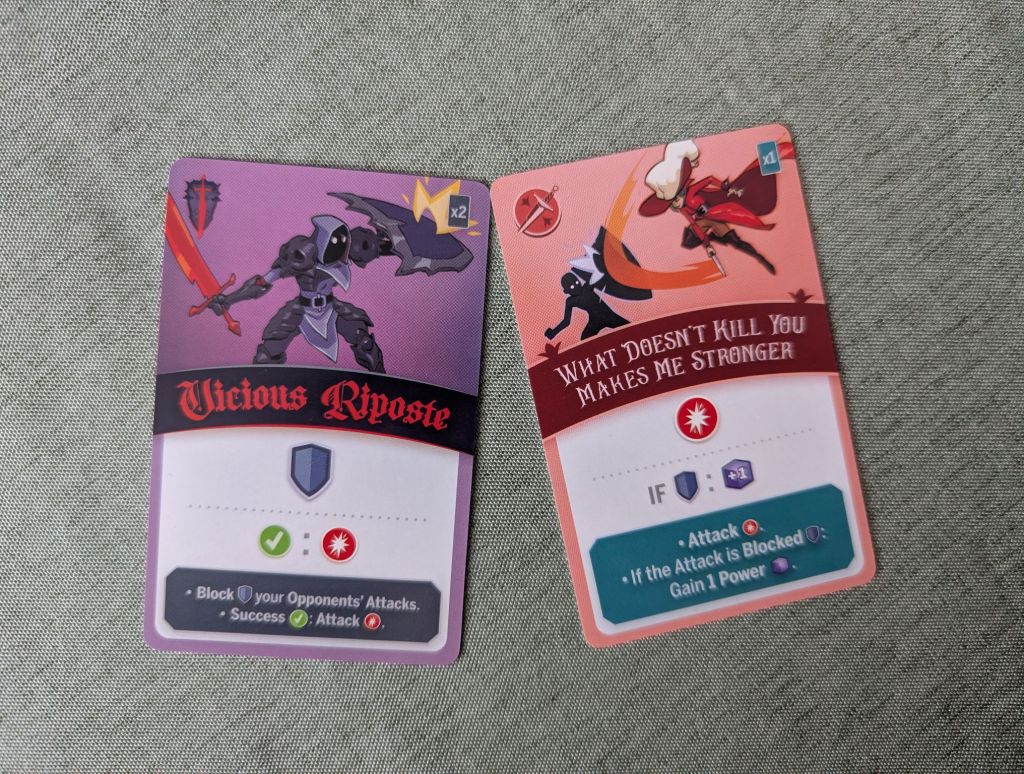
Both players draft two combatants, each coming with their own deck of actions and their own unique tokens. Each character comes with a deck of potential moves and a starting card– your two starting cards together are your starting deck. Both players then play a game of War against one another, flipping their cards one after another and activating their effects without any further choices, auto-battler style. Cards will attack, block, or empower your fighters for later rounds. Once each player’s deck has been flipped out, players draw three new cards and select one to slot into their gameplan.
Because the decks are never shuffled, each player knows, more-or-less, exactly what their opponent is going to do from round to round. They threw two punches and blocked twice this round– next round they’ll do the same, in basically the same order, with something else thrown in there. It isn’t too much to remember, and you only need to remember the contours of their gameplan, anyway. Each character has a unique moveset and interacts with the game’s simple mechanics in different ways, but your opponent is introduced to it one move at a time–never too much to digest at once.
The true juice of Tag Team, aside from the genius of these small, accelerating bursts of action, is in the combinations of characters. Like any good fighting game worth its salt, each character is full of eccentricities, strengths, and weaknesses. When combined with any other member of the cast, weaknesses can be covered up or exaggerated, strengths recontextualized, abilities that seemed worthless supercharged.
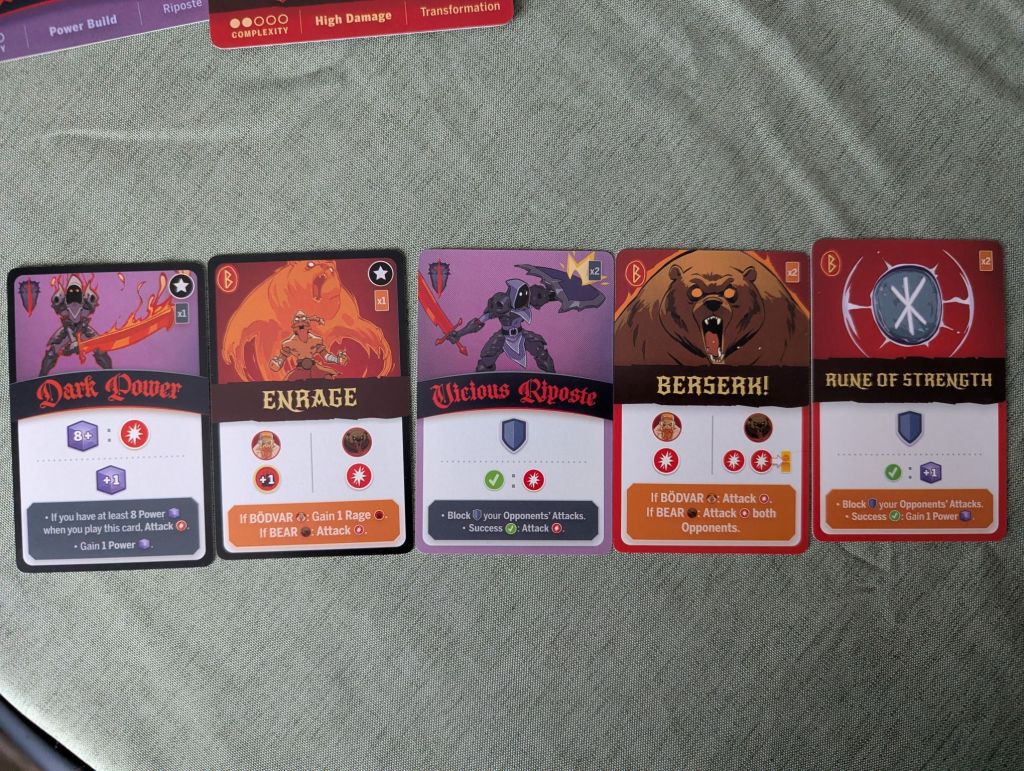
Each fight feels meaningfully different from the last without too much added complexity; all characters are still either attacking, blocking, or doing an effect with a line or two of text. One character bides time before turning into a bear, with each of his card’s having a Human effect and a Bear effect. Another character cycles their little token around, alternating dishing out buffs to themselves and their ally. The characters themselves are colorful and expressive and would feel at home in the next Guilty Gear or Street Fighter.
Tag Team’s battles tend to come down to the wire, too, so you get to imagine these characters gritting their teeth and digging deep. Aggressive fighters put themselves in harm’s way or use their own health as a resource. Careful, cautious fighters escalate the stakes by stacking up more and more power cubes, usually ending in a situation where if anyone can land a blow, it is going to be massive and knock someone out instantly. Either way, each game effect meaningfully contributes towards the game’s ending. It is almost impossible for a match to taper out with both fighters standing in their respective corners spamming taunts or going to time, to extend the fighting game analogy. Sometimes, fights can be over in five minutes, with a skilled read or series of bad decisions ending things before they really get going.
Maybe that potential ending scares you, but come on– this is a game about laying down a beatdown or taking one. Why not just spin up another fight with new characters? Why not just say “you got lucky” or “nice parry” and move on to the next one?
My biggest gripe with Tag Team is the card-placement system. When placing a new card into your timeline, you are meant to be anticipating what your new addition does not only to your inputs but in counter to your opponent’s. It can be muddy. There are 50/50s, of course: “Do I move this block over to pair it with their attack– or will they know I do that so I should keep it where it is?”
In Tag Team’s worst moments, I don’t have the mental energy or investment to do those 50/50 calculations and the bluffs and the careful consideration of my opponent’s intentions. I want to throw the cool card I just drew in at the beginning of my combo so I can see it resolve. Or, worse, I want to make a smart play but it’s hard to visualize what I’m actually changing or to predict what my opponent will do. That, to bring this back to Shaq Fu, is when I would be doing random quarter-circles on the D-pad and hoping something cool happened. A lesser experience? Probably. Still kinda fun? Yeah, but enough of these moments had accumulated I stopped playing for a while.
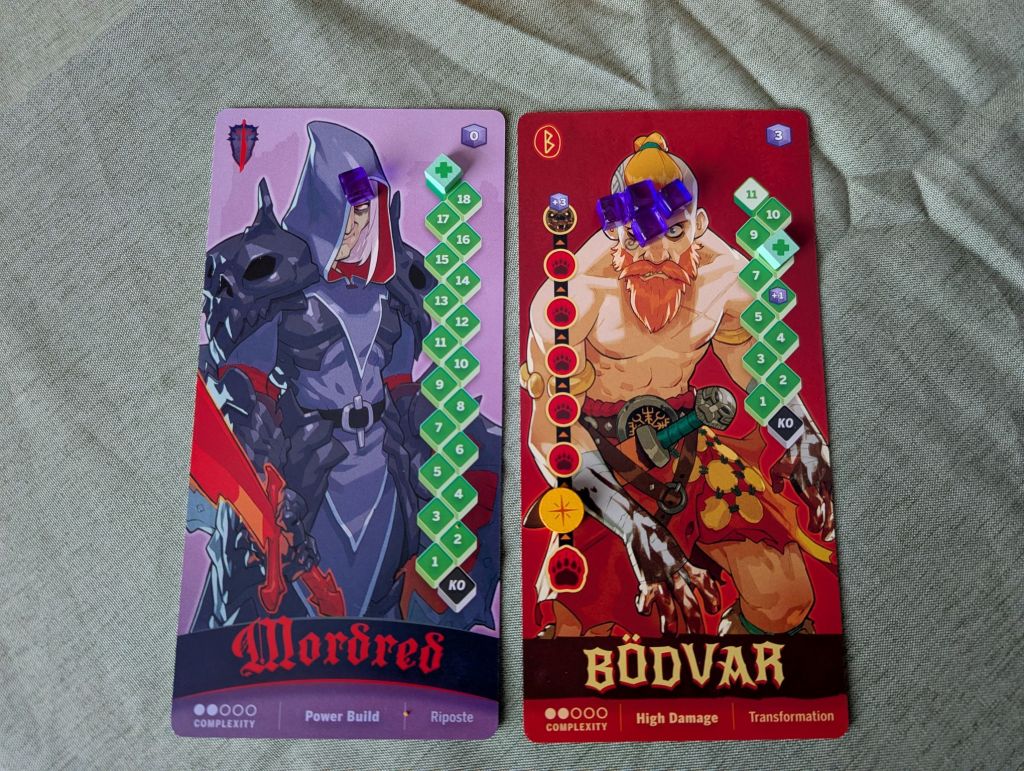
I had resigned to not reviewing Tag Team after my initial plays, but something remote and hidden in a pretty bad SNES title got me back into playing. I queued up for a game on BoardGameArena and matched against someone playing Shango. Shango is, to my eye, the bar-none worst character in the game. I’ve never seen anyone else pick him on BGA, either. I thought: “wow, what a cool guy, not trying too hard to win, just picking a fun little character.”
While every other character in the game interacts with health, Shango wants to KO fighters by getting five Ablaze tokens on them. If he spreads his fire incorrectly (aka hits the wrong character once), he recalls his flame and all of his moves become useless. I, and most other people, read his abilities and thought: “cool idea but that will never happen.” This is a not-unusual thought for those of us inoculated against pie-in-the-sky Magic: The Gathering combos and near-impossible special win conditions in board games. You see them and think they’re cool, but that’s not gonna happen. Not to me.
I proceeded to get the brakes beat off of me by this Shango player, as much as that can accurately describe a BGA match against an extremely courteous stranger, that is. Every move I made, the Shango read it and placed his blaze correctly. I was getting some punches in, doing the usual Tag Team stuff, but every instinct I had, every little move I had relied on to beat all the Mordreds and Maman Brijits and Golems, it wasn’t going to save me here. I got destroyed. It was awesome; a testament to a system that could surprise me even twenty games in. I wanted to reach across the internet, shake their hand, and offer the time-honored head nod communicating “Respect: you got me fair and square.” It felt like a fighting game, in other words. I like it a lot.


Leave a reply to Blake Wehrle Cancel reply